Damage is discovered at receiving
Shock evidence helps teams understand whether handling events occurred before or during delivery.
Solution / Industrial shock monitoring
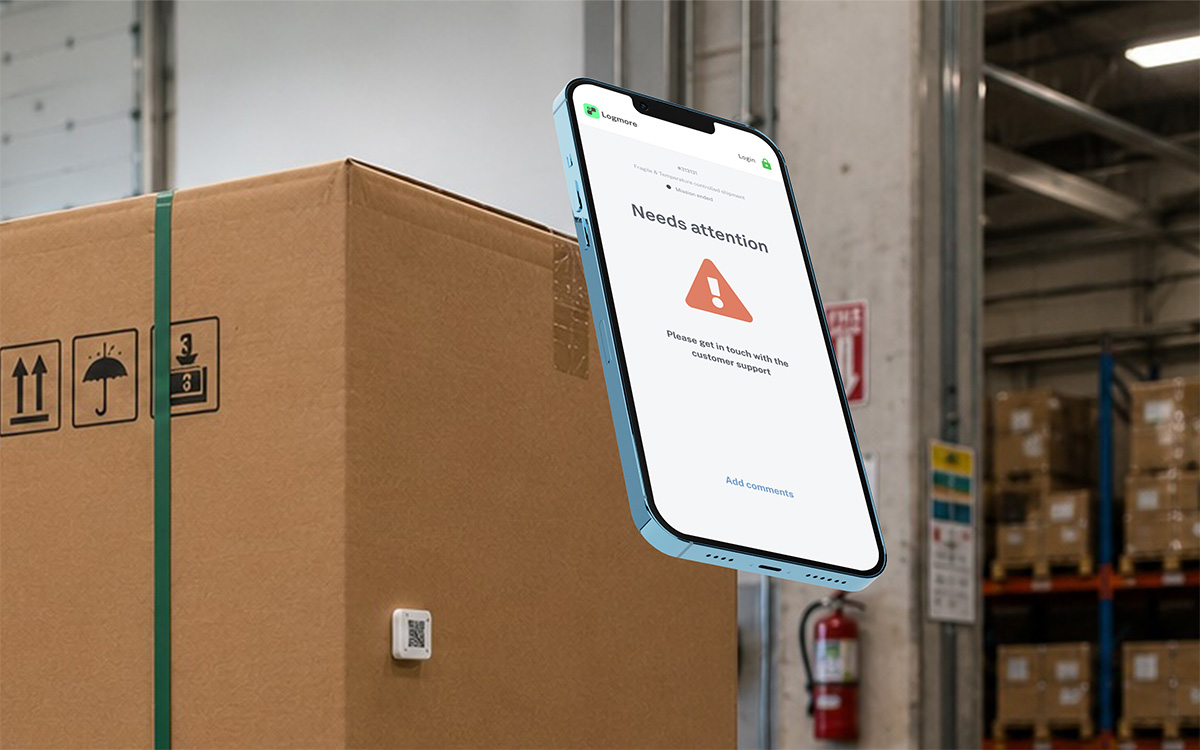
Logmore QR data loggers capture shock, humidity, light, temperature context, and scan events so industrial teams can review damage, packaging, carrier performance, and claims in Cloud.
When this matters
Shock evidence helps teams understand whether handling events occurred before or during delivery.
Event data can show whether current packaging protects products against expected transport conditions.
Reports create a factual basis for carrier conversations, claims, and lane improvement.
How Logmore helps
Logmore connects physical shipment monitoring with reviewable cloud records so QA, logistics, and partners can work from the same evidence.
Logmore logger models can capture shock, humidity, light, temperature, and scan context for sensitive industrial shipments.
Reports help teams share a clear event record with claims teams, carriers, customers, and packaging partners.
Dashboards and exports help teams identify patterns across routes, partners, product groups, and handling steps.
Recommended setup
The right setup depends on product risk, return logistics, sensor needs, and the evidence your team needs after the shipment arrives.
Use shock monitoring alone for impact evidence or add humidity, light, and temperature context when exposure conditions matter.
Align shock thresholds with product fragility, packaging design, transport mode, and what the claims or quality team can interpret.
Use QR scans at receiving, unpacking, escalation, or repair inspection so event evidence connects to the physical damage review.
Damage evidence
Shock monitoring is most valuable when event data connects to inspection, packaging, and carrier review.
Pair impact timestamp, logger placement, scan event, photos, inspection notes, and handoff records.
Set thresholds around product fragility, packaging design, route mode, and what the claims team can interpret.
Use repeated event patterns to test whether packaging protects products against real transport handling.
Scenarios and evidence
Use shock and scan evidence to support a structured investigation instead of relying only on photos or manual notes.
Review event patterns across lanes to see whether packaging protects products against expected transport handling.
Share reports with carriers, claims teams, customers, or packaging partners when shipment handling is disputed.
Workflow
Keep the monitoring process clear enough for warehouses, receivers, QA teams, and partners to repeat.
Set logger type, measurement interval, thresholds, product profile, and reporting rules before dispatch.
The QR data logger records condition history while the shipment moves through carriers, handoffs, dwell time, and receiving.
A normal phone scan uploads data to Logmore Cloud without USB readers, installed receiver apps, or local report files.
Quality and logistics teams review reports, alerts, audit trails, certificates, comments, and exports from one cloud record.
Common objections
It provides event evidence, but responsibility depends on handoff records, contract terms, packaging, inspection evidence, and investigation context.
Shock data is strongest when paired with scan events, receiving inspection, photos, packaging records, and carrier handoff information.
Product context
Industry overview for shock, humidity, light, and handling evidence.
Open pageExample of shipment monitoring for sensitive industrial electronics.
Open pageLogger models for temperature, humidity, shock, light, and dry ice lanes.
Open pageCloud reports, dashboards, alerts, audit trails, certificates, comments, and exports.
Open pageConnect mission data to quality, logistics, WMS, TMS, and control-tower systems.
Open pageFAQ
It is the recording of impact events and related shipment conditions so teams can investigate damage, handling risk, packaging, and carrier performance.
Logmore provides event and scan evidence, but responsibility depends on shipment process, handoff records, carrier terms, and investigation context.
Several reusable Logmore models include shock monitoring. The right model depends on whether humidity, light, probe temperature, or other signals are also needed.
Yes. Reports can support claims and carrier review by showing event history and related shipment context.
Yes. Repeated event data can help packaging teams see whether current packaging protects products on real routes.
Yes. Reports and exports can be shared with carriers, customers, claims teams, and packaging partners according to the customer's process.
Related pages
Review shock thresholds, logger placement, scan points, reports, and carrier or claims evidence for sensitive industrial shipments.